Your Business is Ready for a New Owner, But Are You?
My dad once told me, “Nobody says on their deathbed, ‘I wish I had spent more time at work.”
So, why do so many business owners hang on long after they could comfortably retire? For many of us (myself included), owning a business is not a means to an end, it is an end. “Business Owner” is an identity, and the role provides a tremendous source of purpose.
Identity
Let’s be honest about the identity component, being a business owner is prestigious. People take your calls because you are a business owner. They seek your input, invite you to join boards, and invite you to speak at and attend events, all because you are a business owner. Your business sponsors your kids’ school events and sports teams. Chances are your company even bears your name.
The role of identity and prestige is more important than we like to admit. In that spirit, I’ll share an embarrassing personal story about my own identity vanity that has nothing to do with business but illustrates the point.
I’ve always been into cars. I consider myself a “car guy”. That is part of my identity. So, when I got my first professional job, naturally I bought a cool car, specifically, a 1997 BMW 328is coupe with a five-speed manual and the sport package (including lowering springs, stiffer shocks, and premium 17″ wheels) in Byzanz Metallic Copper with a tan leather interior. It was pretty sweet, and I felt cool driving it.
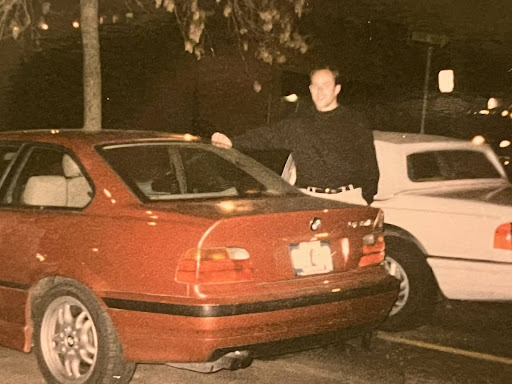
One day, for work I was driving a company vehicle instead, a decidedly uncool bare-bones Nissan compact pickup. At a stoplight, I noticed a cute girl in the car next to me and felt immediately embarrassed by the shabby truck I was driving. How shallow is that? If I’m honest with myself, I probably haven’t outgrown this feeling, since I still remember it like it was yesterday.
If I can admit to being embarrassed about being seen without a prestigious car, maybe it will be easier for our readers to admit some reluctance to giving up the prestige of being a business owner.
Purpose
As powerful as prestige is, it is far less important than the sense of purpose that comes from being a business owner. The more we learn about neuroscience and human nature, the more clear it becomes that a sense of purpose is an important (perhaps the most important) driver of happiness, life satisfaction, and longevity. A sense of purpose means a belief that others need you. This is key, this concept that other people rely on you, you are needed. Purpose cannot come from a solitary hobby, it must come from serving others.
We are social creatures. We have evolved to reward social cooperation. It is the very basis for our enormous success as a species. Social purpose is so important to humans that it can extend our lifespan, or truncate it when we don’t have that purpose. For those of us whose sense of purpose comes from work, especially as a business owner, retirement can literally mean death.
A client of mine recently passed away at age 99. He joined his company in 1945 (1945!), later becoming president and buying the company in the 1960s. He actively ran the business until the day he died, with no succession plan. The business stagnated during his last two decades. But was this a failure for him? I suspect that running his business kept him alive for many years longer than if he had retired. How can you blame him for making a decision that likely extended his life?
However, there is another way for those who seek a full life outside of work. My dad set a great example of how to find purpose and fulfillment in life after being a business owner that we all can learn from.
Finding a Soft Landing
My dad came from a line of entrepreneurs. His father started two securities firms and a handful of other smaller businesses. His grandfather started a lumber mill and a wood flooring business. So, it is no surprise that my dad left the security of a (then) Big 8 accounting firm in 1979 to launch his own firm, at age 32, with a wife and two young kids, spending the first year without taking a paycheck.
By the time I joined him in 2006, he had grown the firm to 23 people, was the president of the local business club, sat on several non-profit boards, and couldn’t walk down the street downtown without stopping at least three times to chat with someone he knew. Everyone in the business community knew my dad. He was the owner of Adamy & Co. (the predecessor firm to Adamy Valuation).
By 2017 we had completed our ownership and leadership transition. With the burden of ownership and firm management now on my shoulders, my dad had the freedom to choose how he wanted to spend his time. He didn’t retire cold turkey. Instead, he chose the clients and projects he enjoyed and delegated the rest to others in the firm.
Most importantly, he filled his newly found time with meaningful volunteer and community engagement. He joined additional community boards. He and another retired executive spent a great deal of time helping the local Catholic Diocese sort out its finances. He joined an angel investor group, which allowed him to exercise his analytical skills in collaboration with other people. And, of course, he spent more time with his family and friends.
Over the next several years, he gradually continued to shift the balance away from work and toward community and social engagement. By the time he officially retired in 2020, it was such a non-event that he declined letting us throw a retirement party for him.
When pancreatic cancer struck him at age 76, he was incredibly healthy (still going to the gym during chemo) and active right up to his last days. He was very clear that he had no regrets. He had a great sense of purpose completely independent of his business that, while it couldn’t stop cancer, still brought extra life to his final years and days.
The Time to Start is Now
Waiting to retire to start finding purpose outside of work is a recipe to delay retirement indefinitely. Instead, start with baby steps toward gaining some freedom from your business. Practice delegating. Elevate your high-performers to take on more of your responsibilities. It turns out that making yourself less important to the business actually makes it more valuable. My colleague, Kaylee Simerson, wrote a fantastic article on this topic.
Use your newfound freedom to find new sources of purpose. Maybe it’s volunteering. Maybe it’s projects with your spouse, or coaching your grandkids’ sports team. Maybe it’s travel with friends, getting involved with your church, or serving on community boards. Maybe you even want to start another business, or help other people grow their businesses. Whatever it is, make sure it is serving others in some way. Research finds overwhelmingly that serving others is the key to a sense of purpose.
Some people can pivot on a dime, pouring all of their energy into a new endeavor and leaving another behind. But, for most of us, a soft landing is far more appealing. A soft landing requires a long runway, so start now.
The dawn of a new year is a great time to reflect on what is most important to you. As you think about your business goals for next year, add some goals that help you become less important to your business. Maybe it’s certain responsibilities to delegate, maybe it’s introducing your key customers to more people in your organization, maybe its a number of days fully offline from work, or even a month overseas, unplugged.
These kinds of changes are hard. While it will ultimately come down to you to make it happen, you don’t have to travel this road alone. We can walk alongside you.